The Future of Fashion Education: How Can Schools Teach Creativity That Cannot Be Automated?

Aug 21, 2025 By

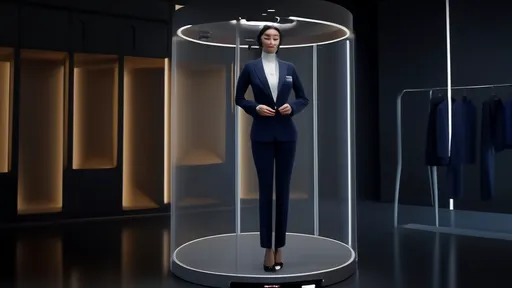
In an era where artificial intelligence continues to reshape industries, the realm of fashion education stands at a critical crossroads. The question is no longer whether automation will impact creative fields, but how educators can cultivate the uniquely human elements of design that machines cannot replicate. While technical skills remain important, the future of fashion pedagogy must shift toward nurturing intuition, emotional intelligence, and conceptual thinking—the very qualities that define enduring creativity.

The traditional fashion school curriculum has long emphasized technical mastery: pattern drafting, construction techniques, and textile knowledge. These skills, while fundamental, are increasingly susceptible to automation. Advanced software can now generate patterns with precision, simulate fabric behavior, and even suggest color palettes based on algorithmic trends. What algorithms cannot do is understand the cultural nuance behind a garment, the emotional resonance of a particular silhouette, or the storytelling that transforms clothing into cultural artifacts.

Forward-thinking institutions are already reimagining their approach by creating learning environments that prioritize human-centric creativity. Instead of focusing solely on technical execution, they're developing courses that explore fashion through anthropology, psychology, and even neuroscience. Students might spend as much time studying consumer behavior and cultural semiotics as they do mastering sewing techniques. This interdisciplinary approach helps designers understand why certain designs resonate emotionally—knowledge that cannot be codified into algorithms.

Another significant shift involves teaching students to embrace imperfection and intuition. Where machines optimize for efficiency and perfection, human creativity often thrives through experimentation and even failure. Progressive educators are creating safe spaces for students to take creative risks, encouraging projects that might not result in commercially viable products but which develop the designer's unique voice. These experimental processes help students develop their artistic intuition—the ability to make creative leaps that defy logical explanation.

The role of mentorship becomes increasingly crucial in this new educational paradigm. While AI can provide technical feedback on stitch quality or pattern accuracy, only human mentors can guide students in developing their creative identity. The most effective fashion educators serve not just as instructors but as creative catalysts, helping students discover their unique perspective and voice. This human connection—the transfer of wisdom, taste, and creative philosophy—represents perhaps the most automation-resistant aspect of fashion education.

Ethical and sustainable thinking represents another domain where human creativity outperforms automation. While AI can optimize supply chains or calculate environmental impact, it cannot make value judgments about what constitutes ethical fashion. Students need to develop the critical thinking skills to navigate complex questions about cultural appropriation, labor practices, and environmental responsibility. These considerations require moral reasoning and cultural sensitivity—capabilities that remain firmly in the human domain.

Storytelling has emerged as perhaps the most vital skill in the automation-resistant fashion curriculum. Great fashion transcends mere clothing; it communicates identity, culture, and narrative. Educators are helping students develop their storytelling abilities through various mediums—from traditional sketchbooks to digital content creation. Students learn to articulate the inspiration behind their collections, connect their work to broader cultural conversations, and build emotional connections with their audience. This narrative dimension gives fashion its cultural relevance and commercial value.

The physical experience of fashion—how garments feel, move, and interact with the body—represents another area where human sensitivity outperforms digital simulation. While virtual try-on technology continues to improve, the subtle nuances of fabric hand, weight, and drape still require physical interaction. Educational programs are doubling down on tactile experiences, encouraging students to develop their sensory intelligence through extensive material experimentation and hands-on prototyping.

Collaboration across disciplines has become essential for developing automation-resistant creative skills. Fashion students increasingly work with counterparts in technology, business, and even science to tackle complex challenges. These collaborations teach students to communicate across specialties, integrate diverse perspectives, and develop solutions that balance creative vision with technical feasibility. The ability to work effectively in diverse teams—understanding different languages and perspectives—remains a distinctly human capability.

Perhaps most importantly, fashion education must help students develop their creative confidence—the willingness to trust their instincts and defend their vision. In an industry increasingly driven by data and algorithms, the most valuable designers will be those who can articulate why their intuitive choices matter. This requires cultivating not just technical skill but artistic conviction, teaching students to balance market awareness with creative integrity.

The future of fashion education isn't about rejecting technology but about rebalancing the curriculum to emphasize human capabilities that complement rather than compete with automation. The most successful programs will create learning environments that feel less like technical training grounds and more like creative incubators—spaces where students can develop their unique voice, emotional intelligence, and cultural awareness. These human qualities will define the next generation of fashion innovation, ensuring that creativity remains our most valuable asset in an automated world.

As educational institutions navigate this transition, they're discovering that the most valuable lessons often happen outside traditional classrooms. Study abroad programs, industry collaborations, and even failure analysis become crucial components of a modern fashion education. By exposing students to diverse perspectives and real-world challenges, educators help develop the adaptability and creative resilience that automation cannot duplicate.

The transformation of fashion education reflects broader changes across creative industries. As automation handles increasingly sophisticated technical tasks, human creators must focus on what makes our creativity unique: its emotional depth, cultural context, and intuitive spark. The fashion educators who succeed will be those who can articulate and cultivate these human qualities, preparing students not just to compete with technology but to collaborate with it in creating meaningful, culturally relevant work.

Ultimately, the question isn't whether fashion schools can teach automation-resistant creativity, but whether they can create environments where such creativity can flourish. This requires rethinking everything from curriculum design to faculty development, from physical spaces to assessment methods. The schools that embrace this challenge will define the future of fashion—not just as a commercial industry but as a form of cultural expression and human connection.

Recommend Posts
Fashion

AI Trend Forecasting: Aiding Tool or Creativity Killer?

By /Aug 21, 2025

As artificial intelligence continues its relentless march into creative domains, a heated debate has emerged across editorial boards and design studios alike. The central question echoes through conference halls and coffee breaks: are we witnessing the dawn of the ultimate creative assistant or the beginning of the end for human originality? The answer, like most things in this rapidly evolving landscape, proves far more nuanced than either extreme suggests.
Fashion

When Will Virtual Fitting Technology Overcome Its Technical Challenges and Achieve Perfection?

By /Aug 21, 2025

In the bustling landscape of fashion technology, virtual try-on solutions have emerged as one of the most anticipated innovations, promising to revolutionize how consumers shop for clothing online. Yet, despite significant advancements in augmented reality (AR), 3D modeling, and artificial intelligence (AI), the dream of a flawless virtual fitting experience remains tantalizingly out of reach. The journey toward perfection is fraught with technical, practical, and even psychological hurdles that researchers and developers are racing to overcome.
Fashion

The Art of Packing for Vacation: How to Organize Your Wardrobe for Different Travel Destinations"

By /Aug 21, 2025

As the wheels of your suitcase roll across unfamiliar terrain, there's a particular art to having brought exactly what you need while leaving behind the burden of unnecessary items. The philosophy of a vacation wardrobe isn't merely about stuffing a bag; it's a thoughtful curation process, a dialogue between anticipation and reality, between personal style and practical necessity. It begins not with a packing list, but with a daydream of your destination.
Fashion

Symbols of Female Empowerment: Power Dressing Beyond the Suit

By /Aug 21, 2025

In the landscape of professional attire, the power suit has long stood as the undisputed uniform of authority. For decades, women entering the boardroom were advised to armor themselves in the structured shoulders and sharp lines of a pantsuit or a skirt suit, a sartorial strategy borrowed directly from the male-dominated corporate world. This was the visual shorthand for competence, ambition, and seriousness. It signaled a desire to be taken seriously by conforming to an established, masculine-coded standard of power. While this was a necessary and effective tool for a generation of pioneers, it represented a limited, almost monolithic, definition of what powerful dressing could be.
Fashion

Fashion Expression of Middle-aged Women: Style Unbounded by Age"

By /Aug 21, 2025

In the ever-evolving world of fashion, a powerful movement is reshaping how society perceives style and age. Gone are the days when women felt pressured to fade into sartorial obscurity after crossing an arbitrary numerical threshold. Today's middle-aged woman is not merely participating in fashion; she is redefining it, crafting a narrative where personal expression triumphs over prescribed norms. This shift isn't about defiance for defiance's sake, but about authenticity, confidence, and the profound understanding that style is ageless.
Fashion

The Disappearance of Maternity Wear: Why Has the Fashion Industry Ignored This Market?

By /Aug 21, 2025

In the sprawling landscape of modern fashion, where trends are born and discarded with the changing seasons, one market segment appears conspicuously overlooked: maternity wear. The disappearance of dedicated, stylish, and accessible pregnancy clothing from mainstream fashion retail is not a sudden vanishing act but a slow, steady erosion. For an industry that prides itself on inclusivity and body positivity, this gap is both puzzling and telling.
Fashion

Practicality of Lingerie as Outerwear: How to Style it for Everyday Chic?

By /Aug 21, 2025

In the ever-evolving landscape of fashion, few trends have sparked as much conversation and creative expression as the art of wearing lingerie as outerwear. What was once a daring, avant-garde statement reserved for the runways or rebellious subcultures has gracefully infiltrated the mainstream, offering a fresh perspective on everyday dressing. This movement, far from being merely provocative, is rooted in a powerful blend of self-expression and pragmatic style. It challenges the traditional boundaries between the private and the public, the hidden and the showcased, transforming intimate apparel into a bold component of a modern wardrobe.
Fashion

Casualization of Men's Formal Wear: Dressing Beyond Occasions

By /Aug 21, 2025

In the world of men's fashion, a quiet revolution is taking place. The rigid rules that once dictated what constituted appropriate attire for different occasions are gradually dissolving. For decades, the suit and tie were non-negotiable staples in a man's wardrobe, reserved for the office, formal events, and important meetings. Today, however, the landscape is shifting dramatically. The concept of dressing for the occasion is being replaced by a more fluid, personal approach to style. This transformation is not just about comfort; it's about redefining masculinity, professionalism, and self-expression in the modern era.
Fashion

The Liberation of Colors in Men's Fashion: How Pink Conquered the Straight Men's Wardrobe?

By /Aug 21, 2025

In the landscape of men's fashion, few shifts have been as quietly revolutionary as the reclamation of pink. Once relegated to the fringes of the masculine wardrobe, dismissed as effeminate or frivolous, pink has staged a remarkable comeback, striding confidently from the runways into the mainstream. This isn't a fleeting trend but a profound cultural reset, a chromatic liberation challenging decades, if not centuries, of ingrained sartorial dogma. The journey of pink from a colour to be avoided to a colour of confident choice is a story of changing masculinity, savvy marketing, and a generation willing to wear what it wants.
Fashion

The Essential Checklist for a Gentleman's Shoe Cabinet: From Loafers to Derby Shoes

By /Aug 21, 2025

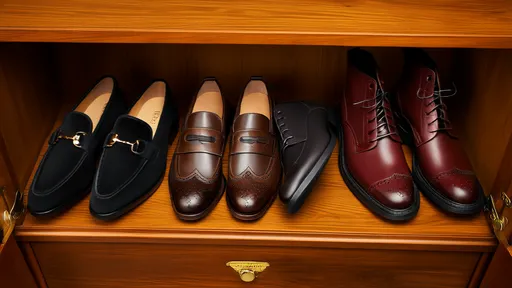
Every gentleman's wardrobe deserves a foundation built on timeless footwear. The right shoes not only complete an outfit but speak volumes about personal style, attention to detail, and an understanding of sartorial tradition. While trends in fashion come and go with the seasons, a well-curated shoe collection remains a constant, offering versatility, durability, and enduring elegance. The journey to building this essential part of your closet begins with recognizing which styles are non-negotiable.
Fashion

The Blue Ocean Market of Men's Skincare: How Brands Can Break Gender Stereotypes?

By /Aug 21, 2025

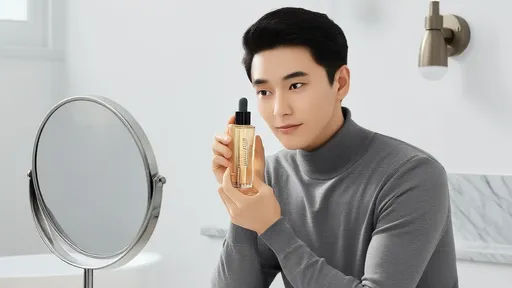
In the sprawling landscape of personal care, a quiet revolution is underway. For decades, the skincare industry has largely catered to women, with aisles of serums, creams, and toners wrapped in floral packaging and marketed with promises of femininity. Men, by contrast, were often relegated to a single shelf of utilitarian aftershaves and harsh, stripping face washes. The message was clear: skincare was not for them. It was a feminine pursuit. But that archaic notion is finally, and decisively, crumbling. A new blue ocean market has emerged, not by creating a separate, segregated world of "men's skincare," but by fundamentally challenging and dismantling the very gender labels that have long constrained the industry.
Fashion

The Revival of Brooches: From Vintage Accessories to Statements of Affirmation

By /Aug 21, 2025

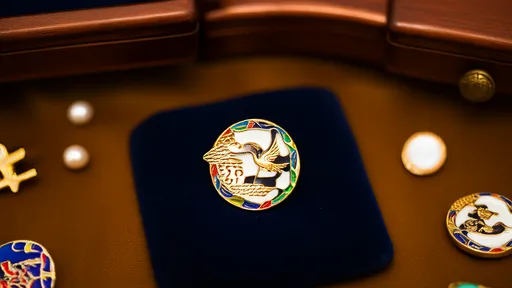
In the hushed corners of antique shops and the curated displays of high-fashion runways, a quiet yet potent revolution is taking place. The humble brooch, long relegated to the status of a grandmother’s forgotten heirloom, is experiencing a remarkable renaissance. No longer merely a decorative clasp for a scarf or a lapel, it has been reborn, transformed into a powerful medium for personal narrative, political statement, and artistic expression. This resurgence speaks to a deeper cultural shift, a collective yearning for tangible objects with history and meaning in an increasingly digital and ephemeral world.
Fashion

The Public Discourse on Men's Skirts: From Controversy to Gradual Acceptance

By /Aug 21, 2025

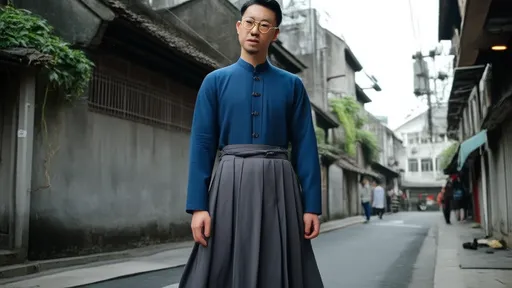
In the ever-evolving landscape of fashion, few topics have sparked as much debate and gradual transformation as the concept of men wearing skirts. What was once a fringe or even taboo subject has slowly but steadily entered mainstream discourse, reflecting broader shifts in societal attitudes toward gender, self-expression, and sartorial freedom.
Fashion

The Manifesto of Socks: How a Pair Can Become the Key to a Complete Look

By /Aug 21, 2025

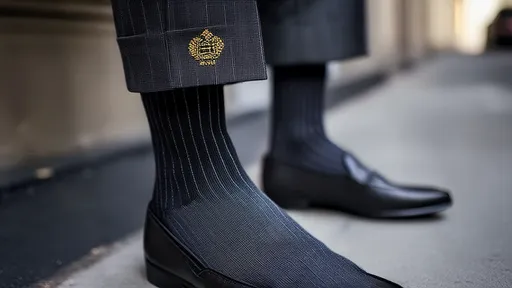
In the world of fashion, where trends come and go with the seasons, there exists an unsung hero that often goes unnoticed—the humble sock. For decades, socks have been relegated to the role of a mere necessity, a functional garment hidden beneath trousers and shoes, meant only to provide comfort and absorb moisture. But in recent years, a quiet revolution has been taking place. Socks have stepped out of the shadows and into the spotlight, emerging as a powerful tool for self-expression and a crucial element in defining one's personal style. No longer just an afterthought, the right pair of socks can transform an entire outfit, adding personality, color, and even narrative to what we wear. This is the sock manifesto: a declaration that socks are not just accessories but the key to unlocking a cohesive and compelling complete look.
Fashion

The Return of Gloves: Tactile Fashion in the Post-Pandemic Era

By /Aug 21, 2025

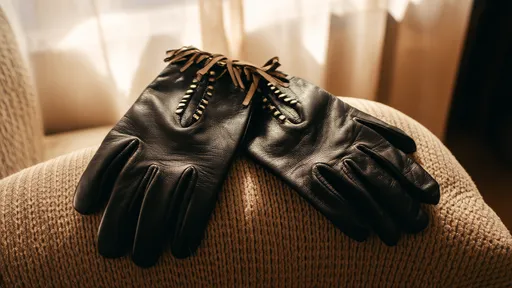
In the quiet hum of post-pandemic life, a curious sartorial shift has been unfolding, one that speaks not to the eyes but to the skin. The glove, a once-forgotten accessory relegated to winter utility or formal costume, is staging a profound and unexpected comeback. This is not merely a trend but a cultural recalibration, a collective yearning for a layer of meaning—and of touch—between ourselves and the world.
Fashion

The Art of Belts: Beyond Waistband, What Else Can They Do?

By /Aug 21, 2025

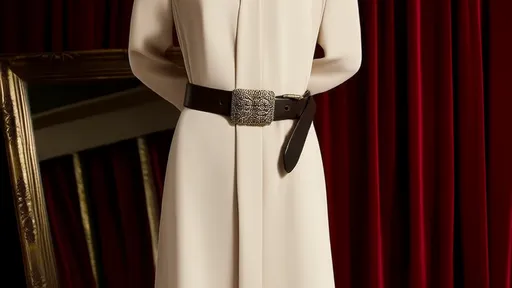
In the world of fashion, few accessories carry the transformative power of the humble belt. While its primary function as a waist-cincher is universally acknowledged, this sartorial staple harbors a wealth of untapped potential. The art of belt styling, often referred to as the "belt's art" or "accent technique," transcends mere utility, venturing into the realms of personal expression, silhouette sculpting, and even storytelling through attire. To view a belt solely as a tool for holding up trousers or defining the waist is to overlook its true versatility as a cornerstone of a dynamic wardrobe.
Fashion

The Styling Power of Sunglasses: How to Instantly Define Style?

By /Aug 21, 2025

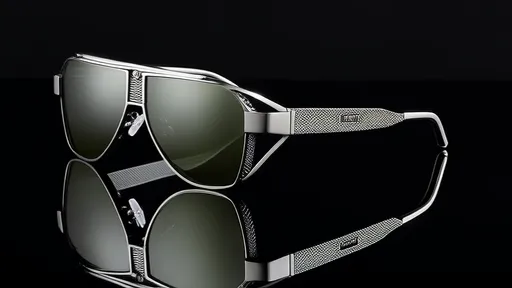
There exists an unspoken language in the way we choose to shield our eyes from the sun. It’s more than just UV protection or a practical accessory for a bright day; it is a declaration. A pair of sunglasses can, in an instant, sculpt a persona, project an attitude, and communicate a narrative without a single word being uttered. This is the formidable styling power of sunglasses—their power to define style in the blink of an eye.
Fashion

The Future of Fashion Education: How Can Schools Teach Creativity That Cannot Be Automated?

By /Aug 21, 2025

In an era where artificial intelligence continues to reshape industries, the realm of fashion education stands at a critical crossroads. The question is no longer whether automation will impact creative fields, but how educators can cultivate the uniquely human elements of design that machines cannot replicate. While technical skills remain important, the future of fashion pedagogy must shift toward nurturing intuition, emotional intelligence, and conceptual thinking—the very qualities that define enduring creativity.
Fashion

Local Protectionism: How Global Brands Respond to the Special Needs of Local Markets?

By /Aug 21, 2025

In an era marked by resurgent protectionist policies across global markets, multinational corporations face an increasingly complex challenge: how to maintain brand consistency while adapting to unique local demands. The tension between globalization and localization has never been more pronounced, with governments implementing stricter regulations to shield domestic industries and preserve cultural identities. For global brands, this means moving beyond superficial adaptations and developing deeply nuanced market strategies that respect local sensibilities while delivering authentic value.
Fashion

The Demise of Fashion Criticism: What is the Role of Critique in a Culture of Praise?

By /Aug 21, 2025

In the shimmering halls of fashion, a profound silence has fallen where once there was vibrant, often cacophonous, debate. The critical voice, once a pillar of the industry, has been steadily muffled, replaced by a pervasive culture of praise. This shift is not merely a change in tone; it represents a fundamental transformation in how fashion is consumed, understood, and valued. The traditional fashion critic, armed with a sharp pen and a discerning eye, has been largely dethroned, their authority ceded to influencers, brand ambassadors, and an algorithmically-driven celebration of the new. To ask what criticism can be in an age of acclaim is to question the very soul of fashion's discourse.